top of page

Updated: Mar 4, 2022

Millions of fans worldwide are horror fans, also known as horror fanatics. There is something about the genre that captivates the audience for different reasons – some love the stories; some love the violence and some just find them pure comedy. However, there is a burning question that many fans wonder – what is a perfect horror film?


A perfect horror can be chosen by fans, or, in most cases scientifically investigated by the core elements needed in a horror film to make it “perfect”.


Upon asking users on Rosie Hughes Reviews Facebook page, key elements suggested by fans include; acting, music, mystery, jump scares, blood volume, human conditioning, cinematography and fear. Not every horror film has all these elements but have become iconic such as “Friday the 13th”, “A Nightmare on Elm Street”, “Jaws” and “Nosferatu”.


Some questions asked on Rosie Hughes Reviews Facebook page


According to scientists, 2012s “Sinister” was the scariest film for eight years running, dubbing it a perfect horror film. It has recently been taken over by zoom horror 2020s “Host” which documents a séance going wrong over zoom. The question is though – why did “Sinister” hold the top spot for so long? Why specifically is this deemed a perfect horror out of over a century worth of films?
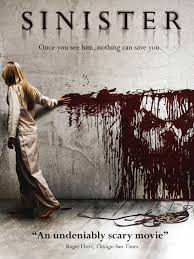


Sinister's official movie poster (2012)


“Sinister” directed by Scott Derrickson came in out in 2012 and tells the story of crime writer Ellison (Ethan Hawke), who moves his family into a house of a murdered family. While writing their story, he comes across film reels in the attic which documents the horror of not only the original family’s death, but other families too. Together Ellison and Officer So-in-So (James Ransone) must find out what ties them together and who is this mysterious ‘Mr Boogie’ who keeps appearing in drawings and the films.


Granted, “Sinister” is a great film, it has some of the great core elements to show why it is worthy of the title for eight years running, especially its music, jump scares and blood volume (or lack of should I say), but many people argue that this is a film known as ‘elevated horror’ and not a definitive horror film.


‘Elevated horror’ is a term that is most recently been used within the genre. The term itself means specific horror films are made to upset you emotionally, with focus on blood, gore and jump scares. Examples of these kind of films are “Hereditary”, “Get Out” and “The Witch”.


Ellison (Ethan Hawke) finding the mysterious film reels in his attic


“Sinister” falls into this ‘elevated horror’ sub-genre for its mere jump scares and gore, especially on the focus of the murders on the film reels Ellison finds, but these are only two core elements – where is the rest?


The acting was near pinpoint perfect, especially from Oscar nominee Ethan Hawke (who has teamed up again with Derrickson for “The Black Phone” coming out this year.) Hawke makes this film better than what it could have been as he suits the sinister, mysterious story.


Should he have watched the film reels?

The music, composed by Christopher Young, who was credited for his score for the American version of “The Grudge”, delivers us one of the most terrifying horror scores ever heard and will be automatically referenced to film like John Williams is to his powerful “Jaws” theme.


The fear aspect comes in the form of the film reels; we, like Ellison are watching these murder films for the first time. Filmed on an old-fashioned camera, an unseen force kills each family and names them aptly through the method of killing – an example being ‘Pool Party’ – the family are tied to metal bars to weigh them down in the pool thus drowning them. This is a clever fear concept – the audience is filled with fear of not only watching it, but also, they can’t do anything about it, which ties into the gore and blood volume respectively.


Ellison realises he is in too deep


The jump scares are easily predictable. It is obvious that the mystery of ‘Mr Boogie’ will appear in the jump scare sequences. His almost Slenderman appearance comes to only children which is a scary concept, especially given the thought and detail put into his fictious mythology.


The mythological 'Mr Boogie' who only haunts children in the film


What is bizarre is a complex film like “Sinister” was knocked off the top spot by “Host” – which is one of the most simplistic stories yet terrified most people who watched it.


'Host' (2020) official movie poster


This proves one thing – a simple story is more. “Sinister” is without a doubt one of the greatest horror films to be made, but having “Host” a simple, cheap film to make: like “Unfriended” is deemed more scary.


A zoom meeting takes a bad turn


Could it be generations have changed and different people are scared by different things? There is no Jasons, Freddys or Michaels in modern day originality – maybe the unseen entities like in “Host” is how the horror genre will progress, and that isn’t necessarily a good thing.


Updated: Mar 4, 2022

Horror: an overwhelming and painful feeling caused by something frightfully shocking, terrifying, or revolting: a shuddering fear. This is the foundation of the term implemented into the horror genre.


Many of us like a good horror film, whether it is for psychosocial, blood, guts, slashing, comedy, or blood sucking purposes; we are fascinated by the genre.


For over a century, horror films have been made; some flopped, but some became instant classics, yet most of our generation refuse to watch films over 100 years ago. Kim Newman, acclaimed author and film critic who specialises in the horror genre thinks he knows why that’s the case: “Netflix subscribers, that’s the reason! I think it’s because there is so many of these things like Netflix that they only tend to have certain horrors.”


In a recent discussion on Rosie Hughes Reviews Facebook page two in ten said they wouldn’t watch a film from 100 years ago because they felt it wouldn’t hold their interest as it has outdated ideas that puts them off watching the likes of Nosferatu’ and The Cabinet of Dr Caligari.’


Max Schreck as Nosferatu in 1922


‘Nosferatu’ and ‘The Cabinet of Dr Caligari’ are films associated with the German expressionist movement, and, to this day are still classed as two of the greatest films ever to be made. Newman said in relation to ‘Nosferatu’: “It’s a brilliant film, that’s the bottom line. Murnau was an incredible director with the likes of Faust’ and The Last Laugh’. He made brilliant films and with ‘Nosferatu’, even though it was nearly lost because he never got the rights to Dracula, is still one of the best films for its cinematography. It is the same with (The Cabinet of) ‘Caligari’, which has just celebrated its centenary. These films are still being used in film these days and that tells you how filmmakers appreciate them.”


The Cabinet of Dr Caligari - the film that started the German Expressionist movement in 1920


As the decades came and went, horror film productions became more popular. According to liveabout.com, only 15 horror productions made between 1896 and 1927, there was a significant jump in the 1950s with 21 productions being made and the introduction to Japanese horror films starting with Ugetsu’ and the first ‘Godzilla’ film.


The first version of Godzilla in 1956


The 1950s seen the rise of horror icon Vincent Price with two major productions in the decade with ‘The Fly’ and ‘House on Haunted Hill’ becoming instant classics. Price continued his status as a horror icon right into the 1960s with the likes of, ‘The Fall of the House of Usher’ and ‘Witchfinder General’. While Price was known for horror in front of the camera, three men behind the camera became horror icons: Alfred Hitchcock for 1960s ‘Psycho’ and 1963s ‘The Birds’, Roman Polanski for his Oscar winning ‘Rosemary’s Baby’ in 1968 and George A Romero’s zombie hit ‘Night of the Living Dead’.


Price playing Frederick Loren in House on Haunted Hill (1959)
One of the Masters of Horror - Vincent Price


As much as ‘Night of the Living Dead’ became an instant hit, it wasn’t many fans favourite. Neil Hibbert, one of the organisers of the For the Love of Horror convention that has thousands of horror fans descend Manchester every October said: “Dawn of the Dead, it was the first full on film I watched when I was young. I love George A Romeo; I love his work. The rules of the zombie genre were never done before until 68s ‘Night of the Living Dead’. He went against the rules and cast a black actor as the main person, which was unheard of in those times, it took a lot of balls to do that.” Neil also pointed out the real reason why ‘Night of the Living Dead’ was scary: “It was the humans that were the scary thing, you had the older guy, Cooper, he lost the plot, the humans caused more damage than the zombies did. It’s the same with ‘Dawn of the Dead’, George always tackled social issues, same with ‘Day of the Dead’ you know, brings a whole lot of layers to a zombie film.”


Night of The Living Dead 1968


When discussing what got Hibbert into horror films, he said: “I’m not sure how old I was but ‘A Nightmare on Elm Street’ was on channel 4 on a Friday night and I lived with my mum, dad and nana at the time. They knew I wanted to watch it and they wouldn’t let me, so we had three TVs in the house and the unplugged mine. So, I knew that my nan would fall asleep first, so, I sat with my nan and bang as soon as she fell asleep, I put channel 4 on and had my first taste of Freddy Kreuger. It scared the living daylights out of me and that’s when the obsession started.”


In the 1970s, iconic horror films were created; ‘The Omen’, ‘Jaws’, ‘Suspiria’ and ‘The Exorcist’ all of which became box office smash hits. However, it wasn’t until 1978 that we were introduced to the first icon of horror villains – Michael Myers. Michael (also known as The Shape throughout the series) was the main protagonist in John Carpenters ‘Halloween’ and instantly became a force to be reckoned with.


Newman, who viewed the film when it was released said: “In a film series, Jason (Voorhees from 1980s franchise Friday the 13th) had the most kills, but I’m sure Michael has now after ‘Halloween Kills’ with the amount in that film alone. Michael is more than what Freddy (‘A Nightmare on Elm Street’) and Jason are. Yeah, they are all killers, but Michael is more referenced as the boogeyman. Freddy and Jason are all out killers, but Michael in 1978s ‘Halloween’ has very little kills, he is stalking you more, watching you – he is the boogeyman and that genuinely scared me.”


Halloween 1978 - the iconic wardrobe scene


Then came the decade everyone remembers for horror films – the 1980s. With 31 horror films made, there was an expansion of sub-genres within horror. Having ‘The Shining’

kick off the decade, we were then introduced to more superior horror killers than Jack Torrance in the form of Freddy, Jason (who ultimately had a vs film in the early 2000s), Chucky from ‘Childs Play’ and Sci-Fi horror classic ‘Predator’ in 1987.


The Shining (1980) - 'The Glare' scene


From the 1990s to present day, horror began to become repetitive, with only a select few in the 1990s being hit horrors like ‘Candyman’ (which website Bloody Disgusting rates as the best horror of the 1990s) and ‘Scream’ – deeming it one of the worst decades that the genre had seen.


Tony Todd as 'Candyman' in 1992s 'Candyman'


In 2004 that all changed with James Wan’s ‘Saw’ and then Eli Roth’s 2005s ‘Hostel’ bringing a new age of violence within the genre. However, Newman said: “I think it’s because there’s so many horror films now being shown with violence rather than anything else. Like ‘Saw’ and ‘Hostel’, more people are watching them now, which are roughly 15 years old. There has been violence for a long time, it’s just more noticeable.”


Torture Porn Hostel (2005) - One of the new wave of violence in film

So, from the beginning of the horror genres conception – why do we really watch horror films? Newman said: “It really depends on what you find frightening. There are so many aspects that are terrifying to all sorts of people. I remember one year when the London Film Festival held a secret horror film screening and they showed ‘Arachnophobia’ and so many people walked out because of their fear of spiders. The horror genre likes to tap into fears of creepy crawlies as well as other things which gives us a variety of elements on the horror scale.”


On a recent question asked on Rosie Hughes Reviews Facebook page, many fans stated the reason they watch horror films is for certain actors, (Jamie Lee Curtis, Patrick Wilson and Boris Karloff were frequently mentioned) but the overall reasoning being they hoped to be scared. There was also a point that was made by one fan that modern day horror films don’t scare them as much, until they recently viewed Edgar Wrights ‘Last Night in Soho’ with the only reason they watched it was for the main star, Anya Taylor Joy and ended up being genuinely scared by its psychological elements.


Whatever draws us to the horror genre, whatever scares us, horror films will always be around to try and evoke fear. It has for over a century, and with upcoming horror films listed on Fansided such as ‘Scream 5’, ‘Halloween Ends’ and ‘Texas Chainsaw Massacre’, which are all sequels to horror classics, we are almost certain that horror films will be with us for many more generations.


1
Home: Blog

Subscribe Form

Stay up to date

Thanks for submitting!

Subscribe Form

Stay up to date

Thanks for submitting!

Home: Subscribe

GIVE A SHOUT

Thanks for your interest in Rosie Hughes' Movie World. For more information, feel free to get in touch.

Thanks for submitting!

Address:

Kilsyth, Glasgow

Email:

  • Facebook
Home: Contact

07397380385

Kilsyth, Glasgow

  • Facebook

©2017 by Rosie Hughes' Movie World. Proudly created with Wix.com

bottom of page